

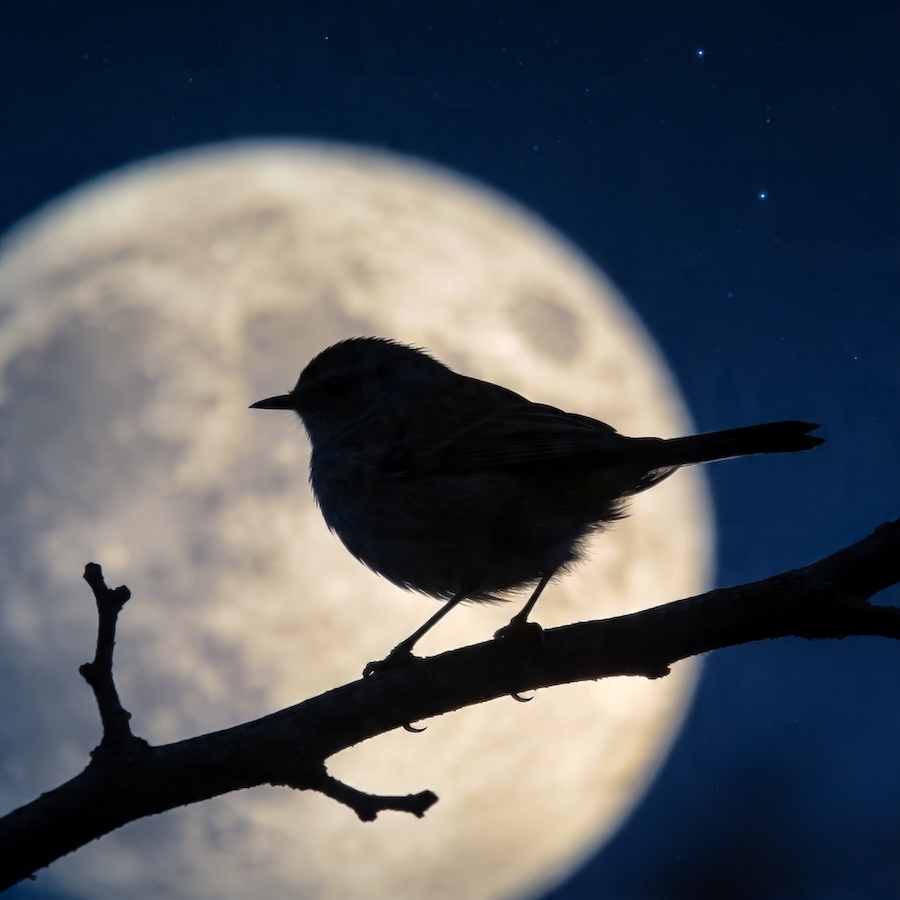
- Birds chirp at night due to light pollution, mating instincts, territorial defense, and urban noise—science has clear answers.
- Spiritually, nighttime birdsong is widely interpreted as a message, divine signal, or prompt toward personal transformation.
- The timing matters: midnight, 1–3 AM, and pre-dawn each carry different symbolic associations in spiritual traditions.
- You don’t have to choose between science and meaning—both can be true at once.
- If nighttime birdsong is keeping you awake or stirring something emotionally, this guide will help you make sense of both layers.
Why Do Birds Chirp at Night? The Short Answer
Birds chirp at night because of biological triggers—hormones, artificial light, seasonal mating cycles, and territorial behavior. For some species, nighttime is simply when they’re most active. But for many people who hear birds singing after dark, the experience feels charged with something more: a message, a nudge, a presence that arrived right when they needed it.
This guide covers both sides honestly. You’ll get the science, the spiritual traditions, and a framework for deciding what it means to you.
The Scientific Reasons Birds Sing After Dark
Science doesn’t leave much mystery in bird behavior—but it does reveal how common and fascinating nighttime birdsong actually is.
Mating, Territory, and Communication
Many species sing at night to attract mates or defend territory when the soundscape is quieter. Unmated male mockingbirds are some of the most well-known nighttime vocalists, capable of singing for hours straight—sometimes past midnight—because competition for a mate demands it.
Robins, blackbirds, and song sparrows have also been documented singing well after dark, especially in spring and early summer. The biological drive behind this behavior is powerful: getting heard means getting a mate, and nighttime offers a cleaner acoustic window to do that.
Light Pollution, Noise, and Urban Environments
Artificial light is one of the biggest reasons urban birds sing at odd hours. Streetlights, building floodlights, and illuminated signage can trick a bird’s circadian clock into registering “dawn,” triggering its full dawn chorus—at 1 AM.
Research covered by Science News Explores
confirms that artificial light is a primary driver of disrupted singing patterns in urban bird
populations, with species in brightly lit areas beginning their dawn chorus significantly earlier
than those in darker rural environments.
Urban noise also plays a role. Daytime ambient sound—traffic, construction, human activity—can mask bird calls entirely. Quieter nighttime windows give birds a chance to be heard, so some species have behaviorally shifted portions of their singing into those hours.
True Night Singers vs. “Wrong Time” Singers
There’s a meaningful difference between birds that are supposed to sing at night and birds singing outside their normal schedule. True nocturnal birds include owls, nightjars, and nightingales—built for darkness. But most of what you hear at 2 AM in a suburb is probably a mockingbird, robin, or blackbird singing out of its usual window because something triggered it.
Common birds you might hear at night:
| Bird | Why It Sings at Night |
|---|---|
| Northern Mockingbird | Unmated males; territorial; high energy |
| American Robin | Light pollution disrupts sleep cycle |
| European Nightingale | True nocturnal singer; complex song |
| Barred Owl | Nocturnal hunter; distinctive “who cooks” call |
| Common Nighthawk | Crepuscular; active at dusk and night |
| Eastern Whip-poor-will | Nocturnal; named for its repetitive call |
Spiritual Meanings of Birds Chirping at Night
Science explains how this happens. Spiritual traditions explain why it feels like it’s for you.
Birds as Messengers in Spiritual Traditions
Across Celtic, Hindu, Christian, and Indigenous traditions, birds have long been regarded as intermediaries—creatures that move between the physical world and something beyond it. Their ability to fly, their songs that seem to come from nowhere, and their freedom from earthbound constraint made them natural symbols of divine communication.
In many traditions, hearing a bird unexpectedly—especially at an unusual time—is understood as a sign that a message is being delivered. (This is a spiritual and interpretive belief, not a scientific claim.) Modern spiritual writers and communities have built on this symbolism, framing nighttime birdsong in particular as a message that arrives when you are quiet enough to receive it.
Many people who experience this find it helpful to explore the broader
spiritual meaning of hearing birds chirping
as a starting point for understanding what the experience might be communicating.
Common Spiritual Interpretations People Search For
These are the meanings most frequently associated with birds chirping at night in contemporary spiritual frameworks. Consider them as possibilities worth reflecting on, not definitive answers:
- Freedom and release — a sign it’s time to leave behind a situation, relationship, or belief that no longer serves you
- Transformation is near — change is coming; stay open rather than resistant. If transformation feels like the thread running through what you’re experiencing,
the spiritual meaning of 999 carries
some of the same themes of endings, release, and what comes next. - Divine protection — you are being watched over; you are not alone in what you’re facing
- A message from a loved one — in grief traditions across cultures, birds are often seen as carriers of messages from those who have passed
- Alignment with your purpose — a nudge to stop drifting and refocus on what you’re genuinely here to do
- Heightened spiritual sensitivity — you’re in a phase of awakening; your awareness is expanding
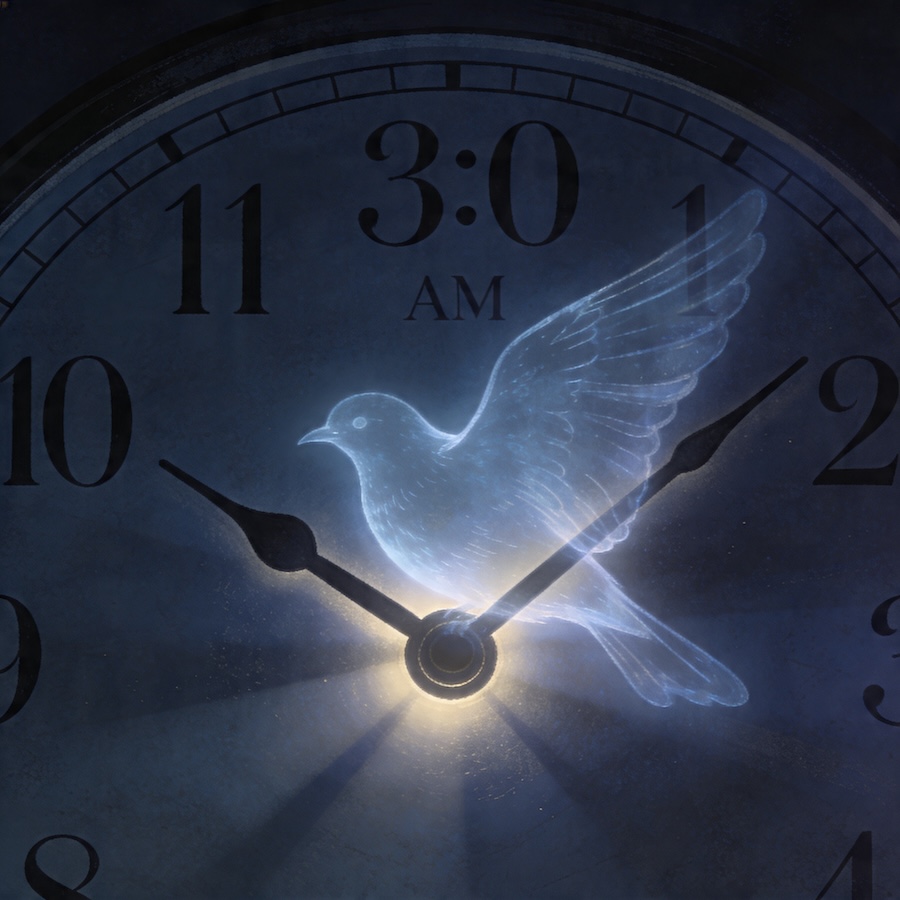
Does Timing Matter? Midnight vs. 1–3 AM vs. Pre-Dawn
In spiritual and numerological traditions, the hour of an experience often carries its own layer of meaning.
Midnight (12:00 AM): Symbolically the threshold between one day and the next—associated with deep transformation, liminal states, and intense spiritual activity. Hearing birds at this hour is often interpreted as a marker of significant inner work underway.
1:00–3:00 AM (“the soul’s midday”): Frequently called the “spiritual hour” or “witching hour” in various traditions, this window is associated with life purpose, introspection, and questions that can’t be answered with logic. If birds wake you consistently at this time, some traditions interpret it as an invitation to go deeper—not into anxiety, but into inquiry.
Just before dawn (4:00–5:00 AM): The pre-dawn window is almost universally associated with hope, new beginnings, and light returning after darkness. Birdsong here carries themes of breakthrough, resilience, and the promise that something heavy is lifting.
Where Science and Spirituality Disagree—and Where They Don’t
Is It a Message, Or Just Biology?
Science is clear: birds chirp at night because of hormones, light, and survival drives. They are not consciously crafting a message for you—they’re communicating with other birds. This is verifiable, repeatable, and not in dispute.
Spiritual frameworks make a different kind of claim: that the timing of an event in your life—when it lands, how it feels, what you were thinking right before—carries a layer of meaning beyond its physical cause. This is an interpretive belief, not a scientific one, and it doesn’t require the bird to “know” it’s delivering a message.
Are You the Audience, Or Just Overhearing?
The skeptic’s position is straightforward: the bird’s call is for other birds. You are an accidental audience. There’s nothing wrong with that framing, and it’s scientifically accurate.
The spiritual position asks a different question: does it matter that you heard it then, during that particular moment of your life? Many people find that the coincidence itself—what psychologist Carl Jung called synchronicity, or meaningful coincidence—is where the value lives, regardless of what caused the event.
Can Both Be True at the Same Time?
Yes—and this is where the most grounded perspective lands. A bird can be singing because of a streetlight and a mating drive, and the timing of you hearing it can feel meaningful and worth sitting with.
Natural cause does not automatically erase symbolic meaning. Science explains mechanism; meaning is something we construct from experience, and that process is profoundly human. You are not required to abandon reason to find something significant in a moment that moved you.
If you’re drawn to the idea that the universe communicates through timing and pattern,
you may also find meaning in angel numbers and how they work
as another framework for recognizing signs in everyday moments.
How to Respond If You Keep Hearing Birds at Night
Practical Steps (Science Side)
If nighttime birdsong is consistently disrupting your sleep, there are practical steps that can help:
- Identify the light source. Check for streetlights, security floods, or neighbor lights near your window—artificial light is the #1 cause of out-of-cycle singing.
- Note the season. Spring and early summer are peak mating season; nighttime singing almost always increases dramatically from March through July.
- Use white noise or earplugs. A fan, sound machine, or app can mask the frequency range of most songbirds without fully blocking your environment.
- Move your sleep position if possible. Simply being farther from a window facing the noise source can reduce how much you’re disturbed.
Reflective Steps (Spiritual Side)
If the experience feels like more than background noise, these prompts can help you mine the moment for personal meaning:
- Journal immediately. What were you thinking or feeling the moment you noticed the birds? What was already on your mind before you heard them?
- Ask one honest question: “If this were a message, what would it be nudging me toward—or away from?”
- Use it as a check-in. Nighttime awareness of something unexpected is a natural cue for a brief breathing practice or body scan rather than a spiral into overthinking.
- Don’t force a meaning. The most authentic interpretations arise from reflection, not from a list of definitions. Let it sit.
When It’s Probably Just Biology—and When It Might Be About You
When It’s Probably Just Normal Bird Behavior
If you live in an urban or suburban area with visible streetlights, it’s almost certainly a light-pollution response. If it’s happening in April or May and you’re in the Northern Hemisphere, you’re likely hearing an unmated male bird doing exactly what biology designed him to do.
This is not a bad omen. It’s not a warning. It’s ecology, and it’s happening in backyards across the country every spring.
When It Might Be a Useful Mirror for Your Life
Sometimes a bird is just a bird—and sometimes a moment of unexpected beauty or strangeness catches you in a state of emotional openness and becomes something you’ll remember.
If you’re in the middle of a major life decision, a period of grief, a spiritual search, or a sleepless stretch driven by anxiety, your nervous system is already primed to register significance. The bird didn’t create the feeling—but it might have given it a container. That’s worth noticing, regardless of what caused the song.
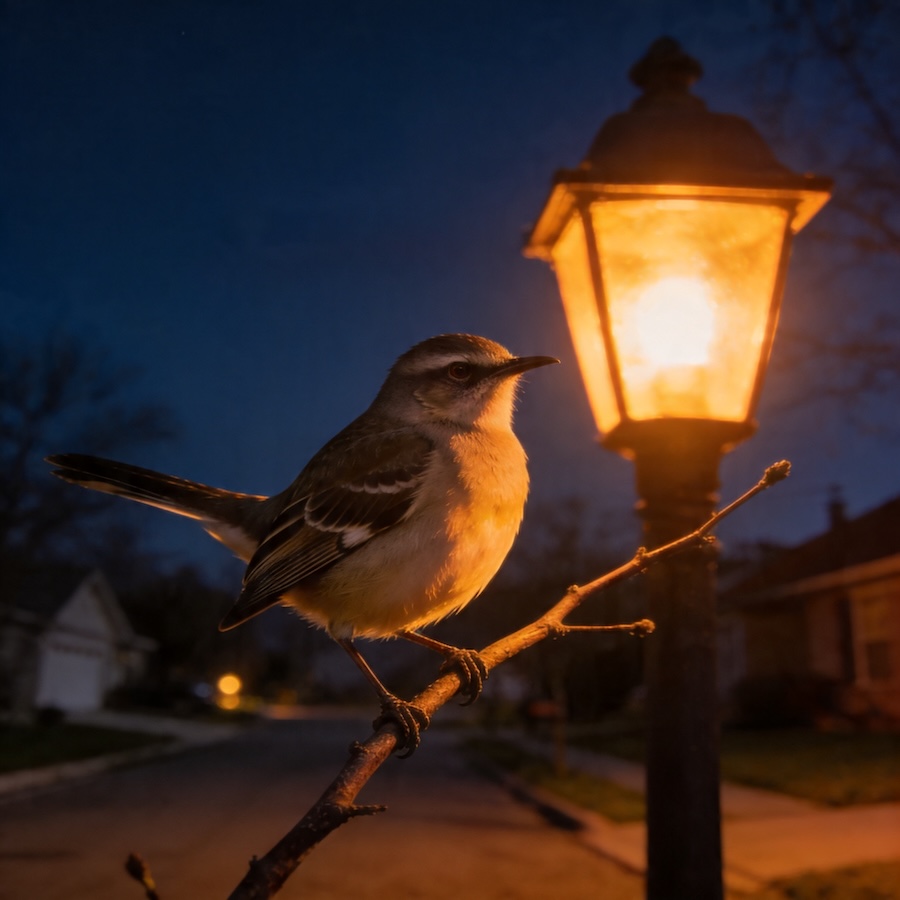
Final Thoughts: Let the Birds Be Birds—and Let the Moment Teach You
Birds chirp at night because they’re following instinct, hormones, light cues, and biological clocks built over millions of years. They’re not thinking about you. The science is settled, and it’s actually quite beautiful on its own terms.
But you are a meaning-making creature, and there is nothing unscientific about that. When something unexpected lands in a quiet moment and moves you—makes you pause, makes you wonder, makes you think—that response is worth taking seriously.
You’re allowed to hold both truths: it’s biology and it found me at the right time. The most grounded spiritual perspective doesn’t require a miracle. It just asks you to pay attention.
If the birds woke you tonight, maybe the most important question isn’t what they mean—it’s what you were already thinking about before you heard them.
If this moment has you thinking about larger patterns at work in your life,
exploring how numerology reveals fate and destiny patterns
may offer another lens worth sitting with.
Key Takeaways
- Birds chirp at night primarily due to light pollution, mating cycles, territorial behavior, and urban noise disruption.
- True nocturnal singers (owls, nightjars, nightingales) differ from diurnal birds singing out of their normal schedule.
- Spiritually, nighttime birdsong is interpreted as a message, divine protection, transformation signal, or communication from the deceased—these are belief-based interpretations.
- Timing is symbolically significant in spiritual traditions: midnight, 1–3 AM, and pre-dawn carry distinct themes.
- Synchronicity—the psychological concept of meaningful coincidence—offers a framework for honoring the experience without requiring supernatural claims.
- You don’t need to choose between science and meaning. Both can coexist in how you process the moment.
Frequently Asked Questions
Why do birds chirp at night?
Birds chirp at night due to artificial light disrupting their circadian rhythms, seasonal mating behavior (especially in spring), territorial defense, and—for true nocturnal species—simply being built for nighttime activity. Urban environments make out-of-cycle nighttime singing far more common.
What is the spiritual meaning of birds chirping at night?
In many spiritual traditions, birds are seen as messengers between the physical and spiritual realms. Nighttime birdsong is commonly interpreted as a sign of transformation, divine protection, a message from a deceased loved one, or an invitation to realign with your life purpose. These are interpretive beliefs, not verifiable facts.
What does it mean when birds chirp at 3 AM?
Scientifically, 3 AM birdsong is often a light-triggered response—a streetlight or security light mimicking dawn. Spiritually, the 1–3 AM window is associated in various traditions with soul-level introspection, life purpose, and questions that go beyond everyday logic.
Is hearing birds at night a bad sign?
No spiritual tradition universally frames nighttime birdsong as a negative omen. Most interpretations lean toward transformation, hope, guidance, or protection. If the experience feels unsettling, consider what emotional state you were already in before you heard it.
Which birds are known for singing at night?
Common nighttime singers include the Northern Mockingbird, American Robin (near artificial light), European Nightingale, Barred Owl, Eastern Whip-poor-will, and Common Nighthawk. In cities and suburbs, mockingbirds are the most frequent culprit for loud, sustained nighttime song.
Does light pollution cause birds to sing at night?
Yes. Multiple studies document that artificial light extends and shifts birds’ singing windows, with some species beginning their dawn chorus hours early or vocalizing through the night entirely. Streetlights and building lights are the most common triggers.
What is synchronicity and how does it relate to birds chirping at night?
Synchronicity, a term coined by psychologist Carl Jung, describes meaningful coincidences—events that have no direct causal connection but feel deeply significant in context. Many people apply this concept to unexpected natural events, including nighttime birdsong that arrives during emotionally charged moments.
Can birds sense human energy or emotion?
There is no scientific evidence that birds can sense human emotion or intentionally communicate with people. However, many spiritual frameworks hold that all living beings exist within a connected energetic field, and that birds may act as conduits for that connection in symbolic terms.
Is a bird chirping at night a sign from a deceased loved one?
This is a belief held across many cultures and grief traditions, but it is not scientifically verifiable. Many people find comfort and meaning in this interpretation, particularly when the timing feels personally significant. Whether you hold this belief is a deeply personal choice.
What should I do if birds keep waking me up at night?
Check for nearby artificial light sources, note whether it’s spring mating season, and consider white noise or earplugs for sleep. If the experience feels spiritually significant, try journaling your thoughts immediately after you wake—what you were already thinking before you heard the birds is often more revealing than the birds themselves.
Interpretive spiritual meanings throughout this article reflect widely held beliefs in metaphysical and spiritual communities. They are presented for reflection and exploration, not as definitive or scientific claims.